What is a site boundary, and why your monthly machine count depends on it
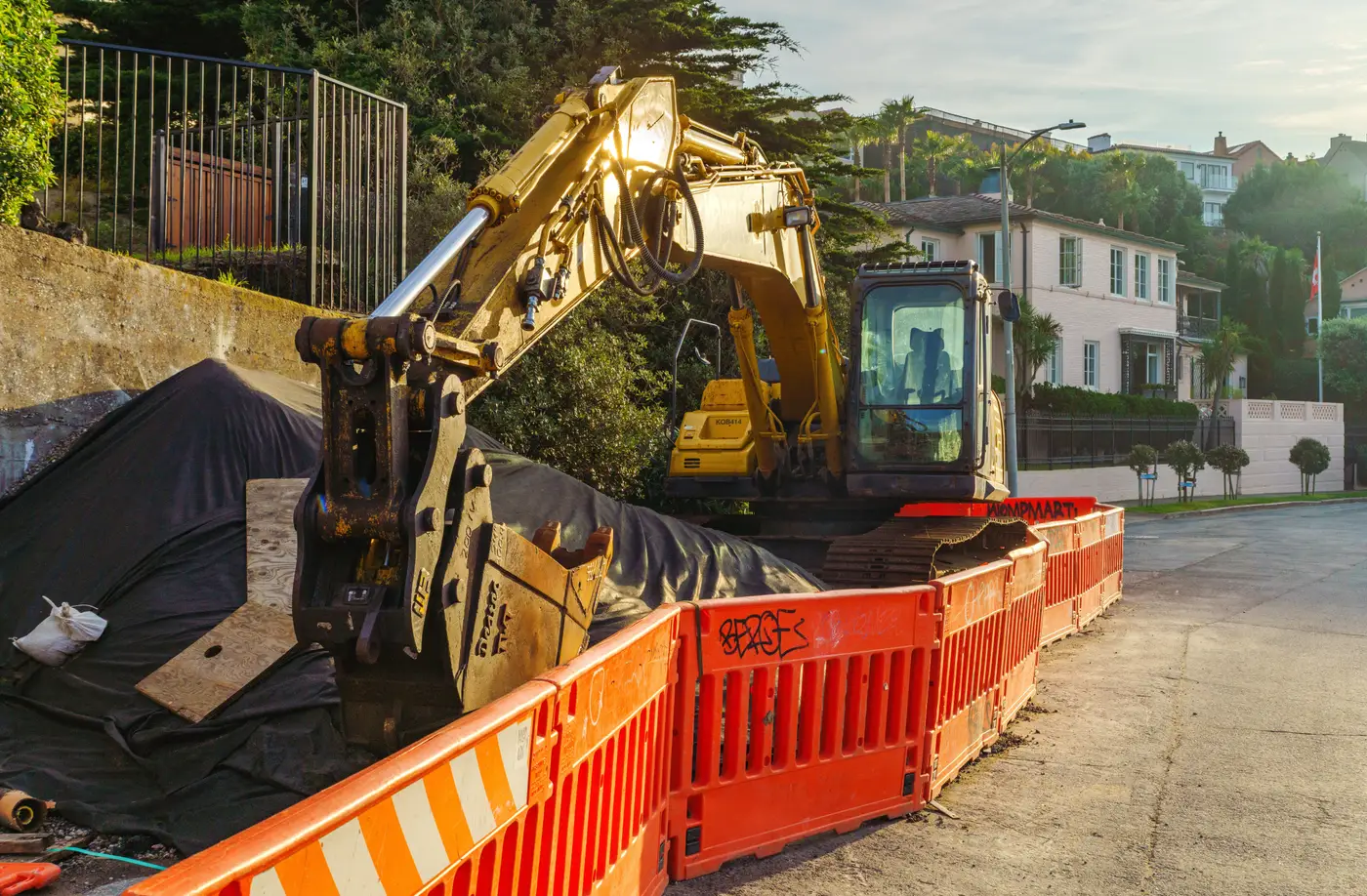
A site boundary is the line you draw around a property before you count a single machine inside it. That sounds like a formality until you're trying to reconcile a dealer's reported fleet size against what's parked on the lot, and half the loaders you're looking at are sitting on the access road, or spilled onto a sub-leased parcel next door, or lined up against a neighboring recycler's fence with no clean break between the two yards.
For anyone tracking equipment counts across competitor sites, the boundary decision is the one that quietly determines whether a monthly number means anything. Draw it wrong and you've merged two fleet owners into one number, or clipped off the back acreage where a rental company parks idle units between contracts. Draw it right and the count holds up quarter over quarter, which is the only way it's useful for watching utilization or a replacement cycle.
Where the yard ends
Parcel lines on a plat map rarely match the way a site gets used. A quarry that leases its back forty to an equipment rental outfit is one parcel on paper and two fleets on the ground. A terminal yard might share a fence with a dealer's overflow lot, with machines parked close enough that from above they read as one continuous row. A construction site active for six months has a staging area that moves every few weeks as the job progresses.
A workable site boundary follows use, not ownership on paper. It's the area a given operator or dealer actually controls and stocks, drawn tight enough to exclude the public road and the neighbor's lot, loose enough to catch the laydown area where machines sit before they're moved onto active ground. Get that wrong at month one and every count after it inherits the error, because nobody goes back and redraws the line once a baseline exists.
Counting rules that hold up across months
Once the boundary is set, the counting rules matter just as much, and very-high-resolution imagery forces a few decisions that a windshield survey never would. A machine half-obscured by another unit's boom still counts if its footprint is identifiable. A unit under a tarp or inside an open-sided shed counts if the shape reads clearly at sub-half-meter resolution, and doesn't if it's fully enclosed. Trailers, attachments, and buckets sitting apart from a carrier don't count as machines on their own, because the question is fleet count, not parts inventory.
The rule that trips up a first pass most often is transient equipment. A truck making a delivery, or a unit mid-transport on a lowboy trailer at the site's edge, isn't part of that site's standing fleet and shouldn't be counted the same as a machine parked there for the month. The fix is consistency: the same rule applied the same way every pass, so a month-to-month change in the number reflects an actual change on the ground and not a shift in how the line was drawn or what got counted as present.
This is also why a count built from a dealer call or a site visit tends to drift. Different people apply different judgment calls about where the lot ends and what counts as parked versus in transit, and that judgment resets every time someone new makes the call. A monthly per-site count read straight from dated VHR imagery applies the same boundary and the same counting rules every pass, so the trend line reflects the fleet, not the method.
Why this is worth getting right before you build on it
Every downstream metric, utilization, market share, replacement timing, is a ratio or a trend built on top of a raw per-site number. If that number moves around because the boundary or the counting rules shifted between passes, the metrics built on it move around too, and there's no way to tell real fleet change from measurement noise. Fixing the boundary once, at the start, is the cheapest insurance against that.
If you're setting up equipment tracking across a set of sites, get the boundary and counting rules settled before the first count, and we can walk through how that looks for your site list.