How to count machines hidden under tarps or storage sheds in satellite imagery
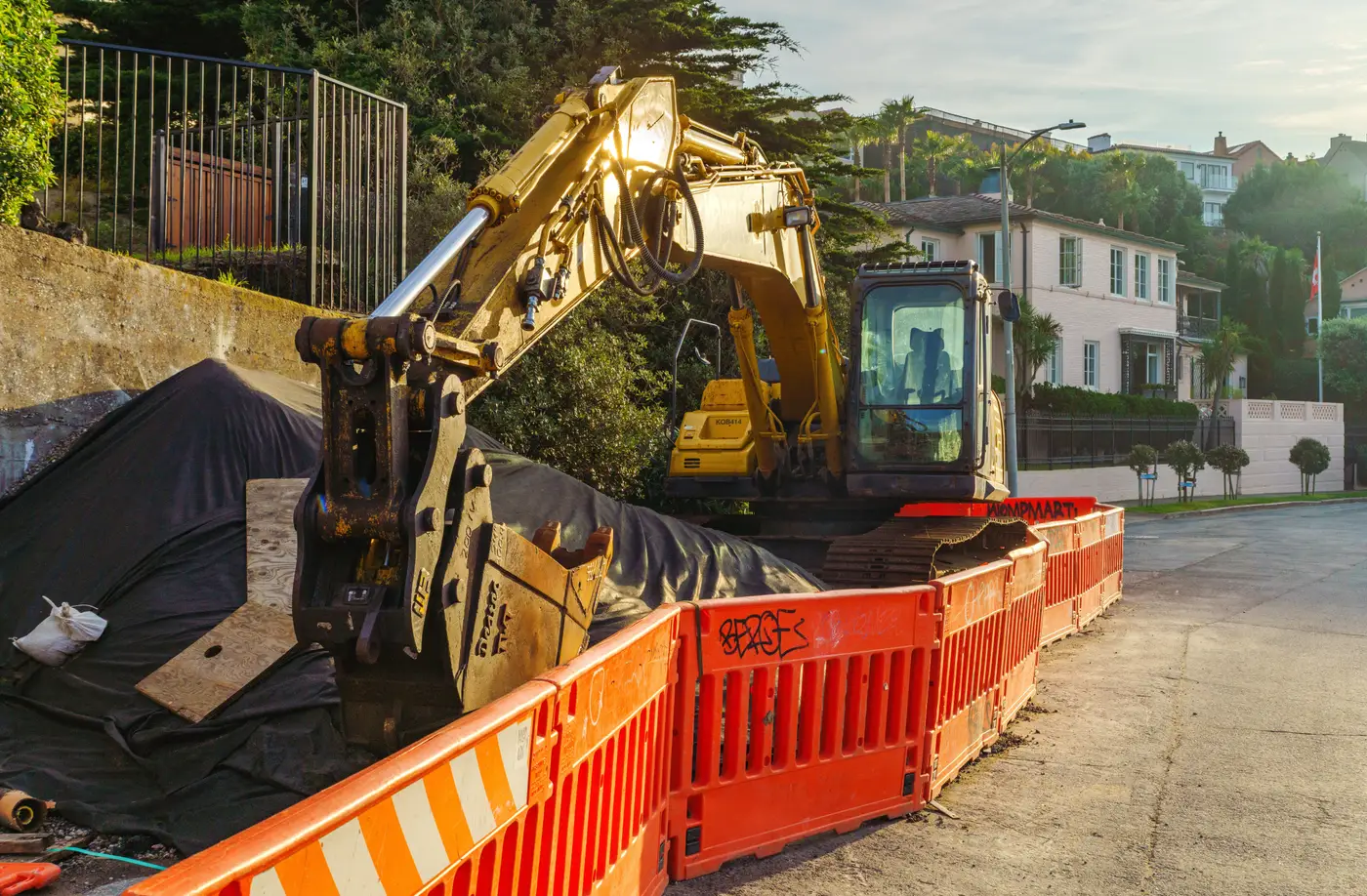
Every dealer lot has a corner where the covered units sit. Trade-ins waiting on a wholesale decision, attachments nobody's moved since spring, a skid steer under a blue poly tarp because the roof leaked on it last winter. From the ground you'd walk over and lift the corner to see what's there. From a satellite pass at 0.5 m or so, you can't. That gap is the first thing anyone pulling counts from imagery needs to understand before they trust the number that comes out the other end.
What a tarp or shed hides
A tarp doesn't make a machine invisible. It makes the machine's identity invisible. The footprint is still there: a rectangular mass with a shadow length and width consistent with, say, a mid-size excavator rather than a mower. You can usually tell something metal and roughly equipment-sized is parked there. What you lose is the make, model class, and often the exact unit count if two smaller machines are tarped close together and read as one blob.
Storage sheds are worse, not better, the way people sometimes assume. An open-sided shed at least lets you see wheels, tracks, or a boom poking past the roofline, which is enough to count units even if you can't classify them precisely. A fully enclosed shed with the doors shut gives you nothing but a building footprint. If a dealer rotates six compact track loaders in and out of that shed over a quarter, a pass-by image on the wrong day can show zero where six sit inside.
This is the part that gets glossed over in pitches for "AI equipment counting from space," so it's worth saying plainly: no imagery source, satellite or aerial, resolves what's fully enclosed. That's a physics problem, not a software one. Anyone promising otherwise is selling something that doesn't exist yet.
Working around the blind spot
Build the monthly count on what the imagery is actually measuring, the visible footprint, and treat enclosed storage as its own line rather than folding it into the total. A few things that hold up in practice:
Treat a monthly uncovered-and-visible count as a floor, not a total. If a lot shows 40 units in the open plus three tarped shapes and a closed shed, your real number is "at least 43, probably more." That's still more useful than a dealer's phone estimate, and it's honest about where the uncertainty sits.
Watch the tarped and sheltered footprints for change over time rather than trying to classify them once. A tarp that's been in the same spot for eight straight monthly passes is probably a long-term trade-in sitting on the books, which tells a fleet analyst something different than a tarp that moves lot position every month, which suggests active turnover. The shape's identity matters less than its behavior across the cadence.
Cross-reference against the prior month's uncovered count for the same lot. If a machine disappears from the open yard and a new tarped shape appears nearby on the same date, that's very likely the same unit getting weatherproofed, not a phantom loss. This kind of month-over-month comparison is where a dated, repeatable count earns its keep over a one-off estimate: you're tracking what moved, what got covered, and what got sold off the lot entirely.
Flag enclosed storage as a known gap in the report rather than silently rounding it into the total. A buyer tracking OEM market share across a region needs to know that dealer lots with large enclosed sheds will systematically undercount relative to lots that store everything in the open. That's a comparability issue across the whole dataset, not just one site.
None of this gets you an X-ray of a closed shed. What it gets you is a count you can defend when someone asks where the number came from, which beats a dealer's "around fifty, give or take" every time. Heavy Equipment Detection builds exactly that monthly, per-site read from VHR imagery, with covered units called out as covered rather than guessed at.
If you're tracking machine counts across dealer lots or yards and want that discipline applied to your sites, get in touch.